Did any of you see “Julie and Julia” and feel inspired by the yummy-looking food always on the screen and at the same time completely tired at even the thought of all that prep for one meal? If you are like me, you may have spent your young-adulthood and early married life convincing yourself and your husband that you were too tired to cook and that anyway there was nothing in the house and eating pizza (insert whatever go-to food you have). I will just go ahead and admit to all of my terrible food ways here. I’m not trying to convince anyone I’m a cook. I’m the one asking for advice on facebook, not giving it.
However…if you are like me or even if you just want to be entertained, keep reading. I’m going to write a bit about what I have so far.
1. I read (over a period of 2-3 years because I didn’t want to know the truth) the beginning to the cookbook called “Nourishing Traditions.” Be warned, this is a complete turn-around from what you will hear from culture at large w/r/t fats and cholesterol. And sugar!There is another book called “The Great Physician’s Prescription” by Jordan Rubin which I read (he’s the author of “The Maker’s Diet”).
*another side note. In order to read any of these books and glean things from them I have found it necessary to do some forceful pushing past of attitudes that feel, at times, rather pedantic and holier-than-thou. No one likes to be talked-to like this. A helpful antidote is Barbara Kingsolver’s “Animal, Vegetable, Miracle.” I’ve never found her to be anything but witty, wise and down to earth. But that’s probably because I largely agree with everything she says.
What you can glean from these books (Not to mention “Fast Food Nation” or from numerous documentaries which I’ll have to get back to you on) is a sense of the foodie zeitgeist coming back around. They’re all saying essentially the same thing: eat like traditional cultures and you will be healthy. In my very limited opinion (and from reading “The Joy of Cooking” a bit) this is something which fine cooking has never lost. I doubt the French have ever just decided to give up butter for rancid oil by-product and lo and behold! they are just as healthy as they have ever been. Except for the smoking – which I’m convinced is what keeps them skinny after all those baguettes in the morning – but that’s another post.
2. I have had to realize and be very honest with myself that a) I will have to spend some time cooking and will have to plan better and b) I will have to learn to cook and eat vegetables. Meat, I’ve never had a problem with. Ditto dairy, eggs, need I say bread?, grains, fruit, etc. Finally, at 29, I’ve had to just turn to myself and say, “I don’t CARE if you don’t like vegetables. You have to eat them.” It helped to have Henry go on an allergy-elimination diet which did away with most of our grains and dairy. And here’s the thing that has been my saving grace: I found a friend who eats and cooks the way I wish I did and I asked her for help. She, in one email, opened up for me a whole new world of what you can do with veggies because she eats only veggies, fats, some dairy and meat. No sugar, no grains. I’m gonna give you a huge tip for winter that she gave me: you can do endless variations on stuffed squash: celery, onion, sausage, apples, cranberries, leftover chicken from the free-range chicken you roasted earlier in the week, cooked greens, leftover meatloaf…and that’s just one simple meal. Pick three things that go together well, saute the veggies in a pan with butter or coconut oil (fat that is solid at room temperature is okay to cook with…the rest of them will go rancid if heated – olive oil is okay at low tempsAnd btw, any other kind of “cooking oil” that you get at the store like safflower, canola, etc… those are ALREADY rancid when you buy them. Rancid=cancer-causing ), stuff the already-baked squash halves and stick in the oven for 15-20 minutes.
*here’s the key my friend gave me: she bakes a bunch of squash when she buys it and then freezes it for easy retrieval afterward. Brilliant!
3. Planning doesn’t have to be done meticulously, but it needs to be done. Don’t go to the store and buy a bunch of random vegetables thinking you’ll just use them all for *something* or-worse- thinking you’re just going to eat them all raw. Unless you are either in love with veggies or REALLY dedicated to a raw diet, you need to think how you’re going to make them all into something you’ll eat and enjoy. Here’s a tip: spinach and other greens cook down into almost nothing, so you can fit a TON of sauteed spinach into a quiche and quiche is really easy to make. As my friend Sarah recently read, you can even make a “crust” from red potatoes sliced really thin and layered at the bottom of the pan if you are trying to get away from processed flour (which I am, but I still bought ready-made crusts for my quiche this week. Baby steps, people!).
You still need raw veggies in your diet. I am TERRIBLE at this. My friend who doesn’t eat grains? She has a salad every day for lunch. I need to learn her salad ways. All I’m going to say on this point is that the other day I made huge salads for us for lunch and as usually happens when I do this, toward the middle of the afternoon I started feeling hungry and awful. I think it has to do with my addiction to sugar and starches and also that I didn’t add enough fat. I ate a handful of nuts and I felt a lot better. Become friends with nuts and seeds (raw, of course, if you can swing it).
Another trick I learned on the planning side is to make the most of a free-range chicken. They cost $14 and are pretty small, but it’s enough meat for 2-3 meals for us when I’ve roasted it. I wash it, drizzle with olive oil and then salt and pepper. I add chopped veggies on the sides and roast until my meat thermometer says it’s done. Get a meat thermometer! Afterward, save all your bones, skin and the drippings from the bottom of the pan (unless you made gravy with them) and toss it all in the crock-pot with some coarsely chopped carrots, celery, onions and garlic, cover with water and simmer for like 5 hours and you have a stock which you can freeze to make many kinds of soup or sauce that is, incidentally, WAY cheaper than any organic free-range stock you’ll find at the store. To make it easy on myself, I just always buy carrots, celery, onions, garlic and potatoes.
4. Budgeting. Here’s some research I’m going to do soon. We don’t have the budget to buy large quantities of organic veggies but apparently there are some veggies for whom pesticides make less of a difference in terms of how much of them we get at the end than others. In other words, “clean” vs. “dirty” commercially produced vegetables. But when in doubt, I’ve been concentrating all my organic efforts on the meat and eggs because truly, feedlot meat is just so awful in so many ways. And if you feel antagonistic toward this viewpoint I will simply point you toward the very mainstream and culturally accepted book “Fast Food Nation” or the documentary “Food, Inc.” So, I’ll let you know what I find out about veggies. I welcome any insight ya’ll have on clean vs. dirty veggies.
*This might be a no-brainer for most of you but for so long we wasted money on veggies because I bought them but never ate them. We ate all our grains first and then got pizza. I know. I suck. 🙂 So, know that it DOES make a huge difference in terms of money if you actually prepare and eat the veggies you buy!
5. What number am I on? I don’ t know. The biggest thing I’ve been learning is that you can’t expect yourself to totally overhaul everything in a week. Go slowly. Do one thing until you feel like you have it under control (for me this means not having to consult a cookbook. And by the way, it helps to have a cookbook that will tell you how to make almost anything. I recommend “The Joy of Cooking”) and then move on. For me this was chicken and stock first and now bread. I don’t feel compelled to give up bread at this point, but I have been making my own. And no, it’s not sprouted. But if you eat sprouted bread, as I have in the past and I’m sure will again, I applaud you. I’m using stone-ground whole wheat flour and molasses. Things I hope to start in the near future: sprouts (apparently, you can sprout almost anything in your window and almost any kind of sprout is good for you EXCEPT the one you find in the store; alfalfa. Isn’t that just the way?) and raw milk and cheese (including making my own mozzarella!).

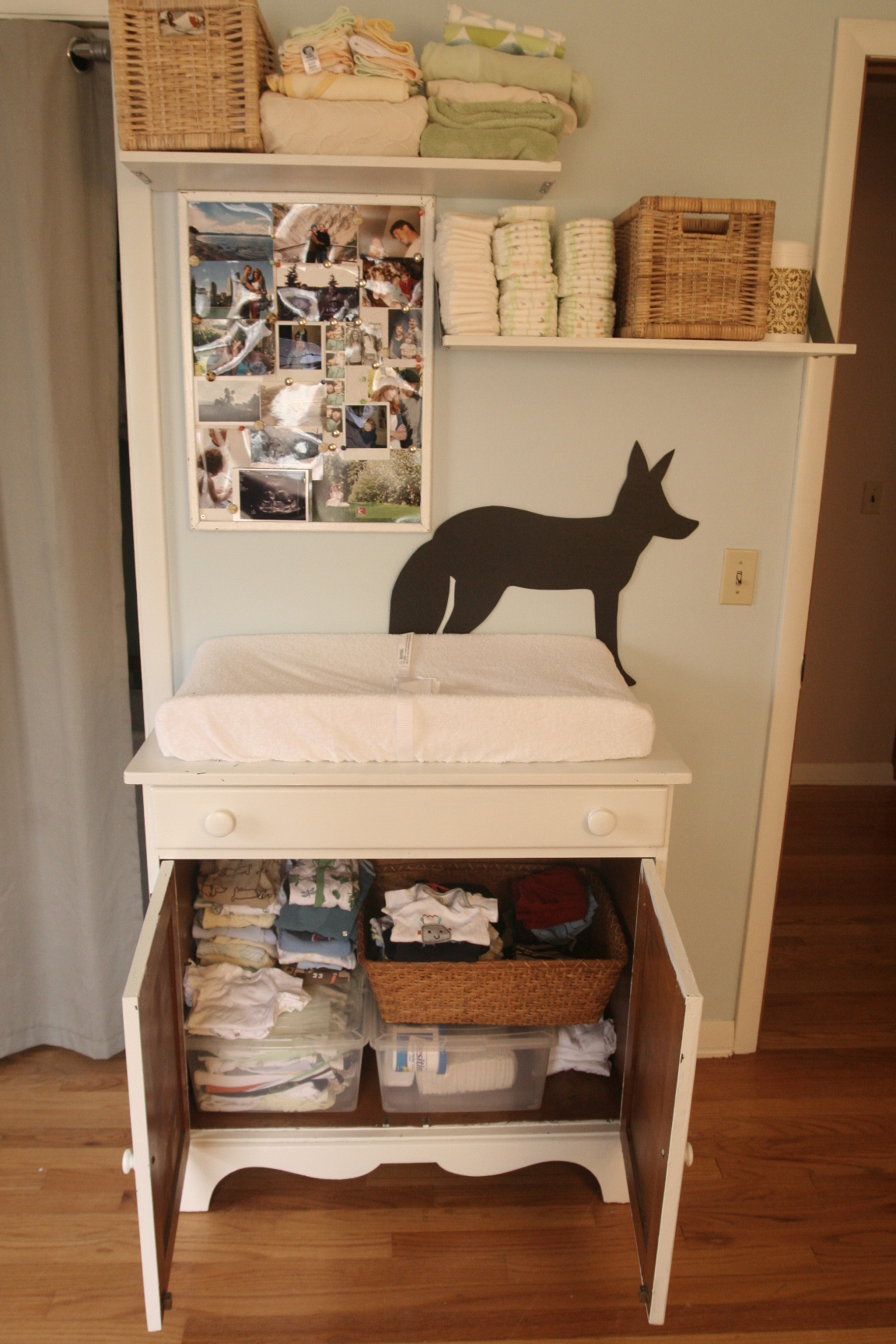
 I tried so hard to get him to give me his Hansolo half smile to go along with his Hansolo outfit yesterday but he was too busy looking at the pictures above his changing table.




















 Hold Fast