The Death of Charlie Kirk

I have been crying off and on for three days and I hardly understand it. The world feels like a different place than the one I was in until Wednesday afternoon. I have been asking myself why I am so affected by Charlie Kirk’s death. Have I ever referred to him in my life? Have I ever even typed his name until now? I know I got emails from Turning Point USA and ignored them over the years. I’ve honestly hardly paid attention to what he was doing except that videos of his debates on college campuses would pop up in my social media feeds sometimes, and  I would watch some of them, but mostly I would scroll past. It’s not that I didn’t agree with Charlie if he was debating someone about abortion or any number of topics, it’s that I felt weary of the world and the endless fighting and arguing. I was sure the arguing was futile – no one seemed to be listening. The world would do its thing, the news media would report on what he was doing how it saw fit, and it would only serve to polarize us further. What I’m mostly here to tell you is that I have a growing conviction in the wake of his death that I was wrong.

Charlie’s death has been a revelation. I saw many people comment that they were radicalized by the video footage of his shooting. I did not see the up-close video many saw, and I didn’t seek it out. I hope Charlie can forgive me for not holding that particular vigil for him. I doubt that is the best way to honor his memory. I saw comments on reaction videos saying people were leaving the political left and they would never vote democrat again. I’ve seen people expressing their anger and a desire to come after the left. I looked on with horror as vigil-goers pulled a man who drove through the crowd shouting “Fuck Charlie Kirk” from his car and beat him. I saw a picture of a graffiti-covered sign that said “Kill Charlie Kirk” and underneath, person after person commented: “I am Charlie Kirk.” Do I even need to go into the other types of reaction videos I heard reported? The ones that celebrated his death? I saw a video made by a girl who was at the event and saw him get shot. She never said her political affiliation, but she was crying as she said people in the crowd were cheering after Charlie went down. I have ventured onto TikTok recently. Even my little reaction video got more hateful comments than positive ones. 

I have been too afraid in my life. I have been doing EMDR for the first time, and I said to my therapist the other day I feel like this demon of fear is sitting on my chest. So much of what I do or don’t do is motivated by fear of what other people will think or of what bad things will happen, or frankly, fear of having to suffer even just a little bit. I know I’m not alone because I also saw many videos first-timers wanting to be brave like Charlie was brave. I am no stranger to getting into debates online, but I doubt I was ever so smart and prepared, nor ever so kind. I think I have been holding onto not just fear, but a lot of anger and resentment. Maybe for a lot of us middle-aged people that has been the norm. We’ve come to accept it. I told my therapist yesterday; I don’t want to be like this. I don’t want to hold onto bitterness. But I also don’t want to shrink from saying what I know to be the truth when I’m with people who I’m afraid disagree with me. I don’t want to hide behind someone else anymore; expect someone else to say what I’m too scared to say. I don’t want to sit back and hope a political leader will make the world a better place. That’s not what saints do. 

There’s been another reaction I’m having a hard time figuring out how to feel about. To myself, I’ve called this the “Christian left” reaction, even though I don’t always know that these people are on the left. In the hours after Charlie’s death, when what I was seeing and hearing about was so dark, I felt pretty cynical about it all. I thought, yes, what I’m seeing is this thing the algorithm knows I want to see: people mourning Charlie’s death, re-posts of some of Charlie’s more viral moments in debate, people saying they’re disgusted by people celebrating and they’re leaving the left. But the people who don’t have my algorithm are probably seeing something totally different. If they still pay attention to establishment media, maybe they’re not seeing the videos of people celebrating. Maybe they’re seeing Charlie called a “right-wing provocateur” instead. Maybe they’re seeing a more mediated, editorialized view of what went on. Especially if they’re not prone to unfortunately doom-scrolling the way I am. I admit, I have been glued to my screen, trying to see how the world is reacting; desperate not to feel so alone in my grief. 

I know it makes sense to cry. A man, a husband, a father, got shot for what he said. I honestly don’t think that’s why I’m feeling the way I’m feeling. I feel such pain for his widow and children, but I knew right away she’s a strong woman. I honestly don’t think it’s that either. I think what I realized, too late, on Wednesday afternoon was that Charlie Kirk was a good man. Probably a great man. I let the fact that he was known for debating and daring to disagree with people to their face, and to argue his ideas with rhetoric, obfuscate what was obvious once I stopped to pay attention: that he did so with great love. He loved the truth. And he loved people too much to pander to bad ideas. He saw the statistics for his generation and the one coming up under him and he loved those people too much to placate their feelings. He knew that placating and making nice is a slow descent into hell. I know it, and you know it too, even when it’s just eating a little too much or sitting around too long or waiting too long to clean something up or have an important conversation or improve your mind rather than sit in front of another piece of entertainment. When you get to be 43, you start to feel the hell those things create, and you start to see how hard it will be to come back. Charlie understood that he was called to try to save a generation from bad ideas: the fall-out women experience after abortions, often hidden. The devastation experienced by thousands of de-transitioners whose bodies are permanently scarred because no one in their lives would at least say the truth. I could go on. 

What I saw when I finally watched Charlie debate was courtesy for the person coming to the mic. He often told his crowd of supporters to quiet down and give the debater space to speak. He would concede if someone had a good point. He would encourage the person he disagreed with that they’d been brave, thanking them for being vulnerable. He would tell them they did a good job. I saw many, many other videos of people talking about how Charlie affected their lives, either directly because of something he’d done for them, or indirectly through his messages. He was relentless in his belief in Jesus Christ. He did not couch his message in other terms. He was not trying to be politically correct or “inclusive.” Ironically, he ended up attracting all kinds of people. Many of them disagreed with him. Many of them said they were better because of Charlie Kirk. 

This is what I wanted to say most of all. I feel Charlie’s death personally in a way I don’t understand. And I think that’s happening to millions of people right now. I’ve seen him called a martyr – and he may be the closest thing we have in America. I don’t claim to see clearly enough to judge that. But I know what I am noticing, and it’s the way saints are often recognized in the Orthodox church: it’s years later in the grassroots influence they have had over the lives of others, and especially in their deaths. Our saints will have gained a cult following and devotion for many years before being canonized, and yes, they are often surrounded by miracles. What I feared in the hours after his death was a violent reaction on the right. I certainly saw enough of that rhetoric and blame to fear it. I know that’s not what Charlie wants, even though he disagreed with the rhetoric and policies of the left and was vocal about it. But I have not seen violence erupt. No riots, no looting. The very night he was killed, I saw people gathering on the steps of buildings and singing worship songs together. I saw video after video of young, gay men and women with tattoos and piercings saying they didn’t agree with Charlie but they were touched by his life and they wanted to return to God, to return to church. And that’s what I feel in my own heart. I’ve never left the church, but I’ve been failing to show up for my kids the way I want. I’ve been failing to show up for my community and my church the way I want. I’ve been failing to take care of my body so that it can be a tool God can use for the good of others. I’ve been too afraid to do hard things and have hard conversations. Making excuses. I’ve let anger and bitterness take root in my heart and stay there for too long. I’ve neglected to pray as much as I ought to. I’ve neglected my mind and opted for the worst forms of distraction and entertainment instead. I’ve given up on doing the creative work God has given me to do. 

You may have seen people saying: “They created a million Charlie Kirks.” This, God willing, is what that means. Not that everyone will go debate people on college campuses and start a conservative podcast, but we will not let a good man’s death be in vain in our own lives. We will let the change in our culture start in our own hearts and minds and spread to our neighborhoods and our churches, and our friend groups. We will repent, first and foremost, of our sins. We know what those are. Repentance means seeing ourselves clearly, making a change, making amends where we can. Very often it means backtracking painfully. We will have the hard conversations and forgive people. We will have grace for those we consider our enemies. We will pray hard for the people who celebrated Charlie’s death because they’re suffering in such darkness if they can do that. We will resist evil and tell the truth about what that is without fearing who thinks what or says what about us. We will give to the poor until it hurts. We will put down our phones and spend our time talking to people. We will get married and build families. Some of us will decide to have more babies. Some of us need to adopt or foster children. We will build things and fix things in front of us that need building and fixing. We will not hide away, afraid of what might happen, afraid of the end of the world, afraid of the laughter of people if we express the wrong opinion. We will try to see the image of God in every single person in front of us, no matter how much that person may hate what we represent, or even hate us. I have seen people worshipping God these last few days. Around the world. I have seen people resolving to do better and be better, and I am one of those. I think, as I believe that Charlie is now interceding at the throne of God and that he was at the very least engaged in saintly pursuits, this is what I am feeling. Charlie is still at work. He is still *FOR* us. He is praying for us now, unencumbered by anything else. What I saw of his life when I paid attention leads me to believe this is right where he wanted to be. It is unfortunate that it takes the death of a good man to wake people from their sleep. 

If you are someone who hated Charlie and celebrated his death, please know that I don’t harbor ill will toward you. I don’t want violence to happen to you. I will pray for you. If we have disagreed in the past, I will also be praying for you, for God’s blessing on you, for your good and your thriving. I encourage you to pay closer attention to your ideological opponents, to Charlie and what he had to say, but especially how he said it. Maybe you will be surprised.

Great Lent: Not Here To Look Pretty

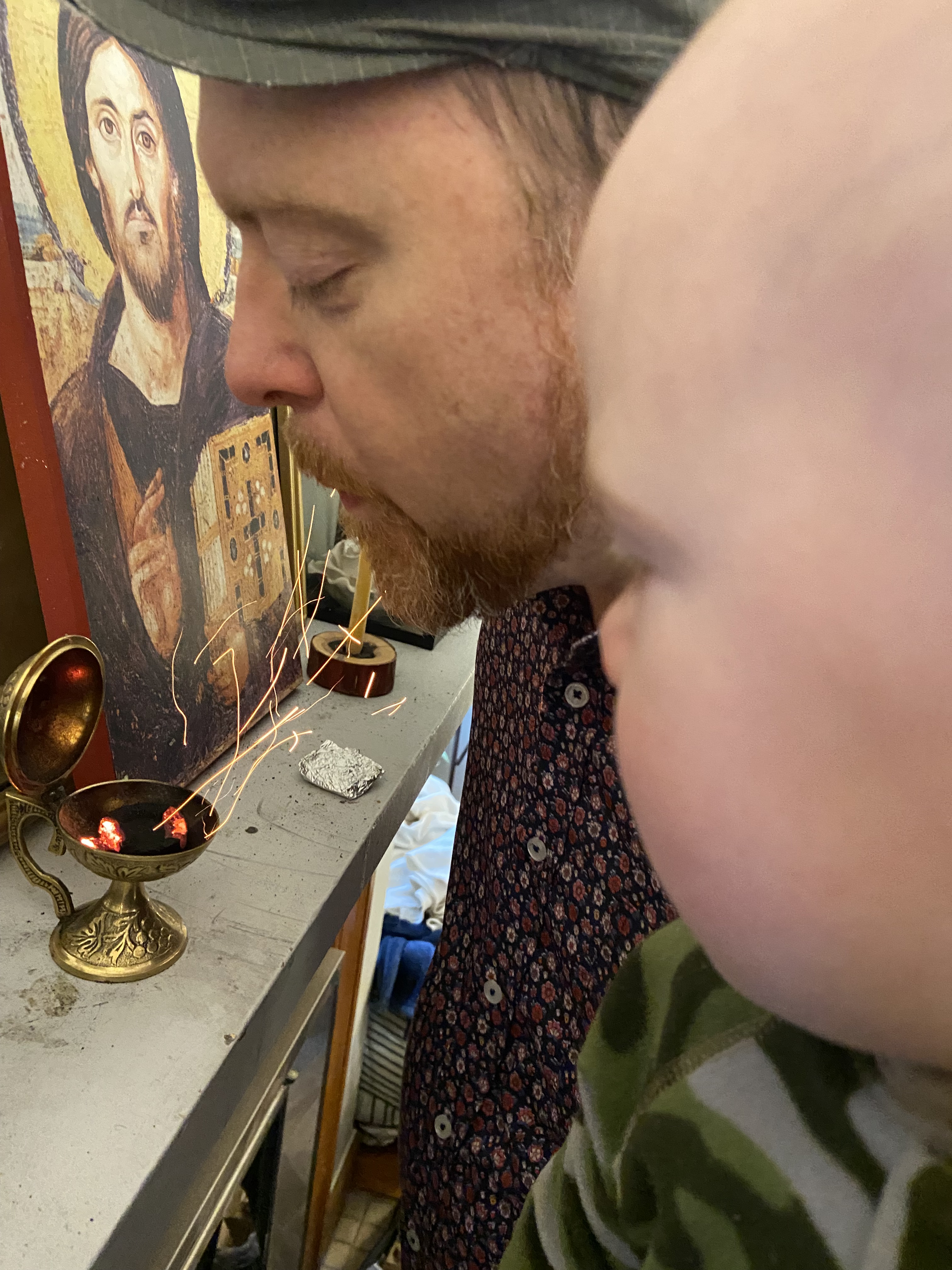
As I write this, I’ve just finished looking for a solution to our incense problem. I was gifted an “Orthodox smoke machine,” in the words of (and by) my brother-in-law a few years ago and we’ve only just started to use it regularly because we have just started attending an Orthodox church. I didn’t know until Henry got involved that I’d been only using the charcoal thinking the incense was part of the charcoal brick somehow. It smelled sweet. So we bought some frankincense. It’s not going well – the burning of incense. We can’t get the charcoal to light up very quickly, nor the incense to burn steadily. It goes out when we shut the lid and it burns too fast when we open it. Today we propped it open a bit and it still burned out too quickly. Back to the drawing board. But it smells extra holy in our living room, and that’s all we need for now.

I found a link to a discussion on Reddit because I was sure others had had the same problem, and through that link I found yet another Orthodox website offering things that are sold out. They were completely sold out of all their home censors. All within the last week, I have tried to find an Orthodox service book for Divine Liturgy and Vespers: sold out everywhere I looked. I tried to find this book. Sold out everywhere. Those things, in and of themselves, might not mean much, but put it together with the fact that the church we’ve been attending has exploded with growth in the last two or three years. The priest told us our first week young men have been coming because they heard Jordan Peterson. It’s what I like to call the Peterson, Pageau, Podfathers Pipeline. He said new people are coming every week. My favorite podcast, The Lord Of Spirits, has listeners from every continent, often listening live at odd hours. My Aunt and Uncle’s parish which we’ve visited once a year for the last eight years has doubled in size in the last year. The Symbolic World began as a YouTube channel and now has a publishing company. Jordan Peterson recently appeared at a Symbolic World conference as a special guest. It feels, as I write this morning, like something big is happening. Like, I don’t know, a movement of God? It’s palpable and exciting. It feels like our being here was inevitable.

No doubt to any Orthodox I sound like the new convert I am and this is all very familiar. Wait a few years. Don’t get ahead of yourself. Let this feeling be a warning to you. If you start to feel like you’re exalted in some way, you are most certainly on the wrong track. The saints, I hear, are marked by their humility.

No doubt my dear Anglican friends will read this and feel a mix of feelings. We Anglicans, many of us, are Ortho-curious. It’s a rare Anglican priest who hasn’t at least had to wrestle with either Roman Catholicism or Orthodoxy. I have many friends who have converted to one or the other from the Anglican church. And I understand why that feels confusing and hurtful to those who are left, especially to the priests and their wives who have toiled so hard for the church. Have I not been told for many years that we are one of the orthodox? The church was in Britain early. Very early. They’re not wrong. The Bible was translated into Old English before the King James version was translated. St. Patrck is on the walls of St. Mark’s. I’m working on another post about our long decision to start down this road, but it will take more prayer and thought. Hopefully, I’m not arrogant enough to assume I can allay your fears. All I can say is that I love you all very much. You have been our lifeline.

For now, I just wanted to give my impressions of jumping in right before Great Lent. We have been attending St. Mark’s for a little over a month now. Five Sundays. Today is Clean Tuesday, the second day of Great Lent, which will end the last week of April and then we’ll continue fasting and praying in Holy Week. We aren’t allowed to take communion or partake in any of the sacraments. I made that mistake with a question about confession at catechism class last week even though if I’d thought about it I would have realized I already knew the answer. I will have to be baptized or chrismated first. We can become Catecumens only when our whole family is ready. But we receive every blessing we can. I have been kissing so many things. I don’t know that much about Holy Week in the Orthodox Church other than a) it’s best ever and ever and unto ages of ages amen, and b) it starts just before midnight and that we feast until the wee hours, go home and sleep for a bit, and then feast again in the afternoon on Pascha. I’m cautiously looking forward to it. We speak of “bright sadness” during Lent. Is there a word for a sort of “bright dread?” I do have a toddler, after all.

Last night I attended the first of five nights of the Great Canon of St. Andrew. Henry will go tonight and I will stay home and do the kid things. It was a trying day. Since we have some experience with Lenten fasting, we’re going to keep the Orthodox fast, which is no meat, no dairy, no oil, no alcohol. And for this first week, which is supposed to be the most intense, we are trying to fast from any food for at least the first part of the day. I was intending to go until dinner time, but I decided to eat some food at 3pm. I have received several admonishments not to try to do too much at first. New converts are notoriously zealous.

I was looking forward to a nice, quiet, restful Lenten service. My body felt weak, my head a little achey, and my mind had been a spacey all day. Try as I might to replace my stupid phone-related vices with prayer, early afternoon found me with a podcast and a coloring book as that was all I felt I could manage with Cora. A long shot from prayer but at least not actively drooling over new dresses on Pinterest (There’s a joke I like to make about how Orthodox converts like to dress like they are 18th-century Russian peasants. Give me a gathered skirt, a babushka, and a sturdy pair of boots. I am here for it).

It was not to be. Imagine my surprise when, as I finished hurriedly kissing Icons in the front (for the first time) and getting to my place (realizing I’d forgotten to venerate the Icon and beautiful gate in the middle and feeling stupid), everyone around me began to prostrate. Knees on the ground, butt in the air, forehead on the floor, and then stand up. Over and over. The choir had to do it while singing! I should have remembered this from Facing East, but I did not. Father had told us about it as well, but I’m finding Orthodoxy to be a rushing river I have to jump into and pray. You’re never going to be “ready.” So, I followed along. This was not the sitting-in-the-dark-with-tinkling-piano-trying-to-search-my-own-heart-hoping-no-one-will-ever-know-my-embarrassing-sins repentance of my youth. Nor is it the Imposition of Ashes and the injunction to remember that I am dust of my early adulthood. My sore knees, quads, and triceps can attest. I had to remove my sweater quickly between prostrations at some point (alas, I was wearing jeans) and still a little bead of sweat slowly slid down my spine before we were done. I was grateful not to be wearing a skirt to trip on or a head scarf to adjust and hold the heat in around my head. I was surprised when I left by how much I needed that service and how rested I felt, though I was hardly aware of any of my own thoughts, being too busy trying to listen through all the prostrations and stay focused on the Icon of Jesus and the Theotokos towering above the back of the altar. Perhaps that’s the point.

We will be prostrating ourselves many more times before Lent is over. The Great Canon is done in the fifth week of Lent in its entirety one day. We are going to beg for mercy thousands of times from a Lord who wants nothing other than to show mercy, but it will remind us that we are rebels and we are sick with sin and need healing, lest we forget and start to blame God for the bad things that happen. Father said last night we fast because we WANT our passions to well up. Not to take them out on other people, but to expose them. To see ourselves how we truly are and to make another attempt at repenting. Then we will fall again, receive grace again, and begin again.

We missed Forgiveness Vespers on Sunday night so we could spend time with friends we rarely get to see, but if you want an account of that service you should read Facing East. That was the moment I said, “you’ve got to be kidding me.” The whole church literally asks every other person there for forgiveness. Like, right in each others’ faces. You have to look them in the eye and all. When I read about it I thought: I want this. I need it. But I also want to run screaming. Isn’t there a way to be a Christian without all the prostration, the humbling, and the looking yourself and other people in the eye? Can’t I take this seriously but just, like, privately? Doesn’t His grace cover all of this anyway? How useful is guilt, really? Aren’t I really feeling, like, too much guilt over stuff I can’t help? Broken relationships that I’ve done my best with? Habits that are probably not great, but really not that bad in the grand scheme?

It’s just that…I wasn’t happy, you know? We were constantly talking over the same “problems” with each other. We’re not happy in Michigan, we don’t have enough spiritual community, we don’t make enough money, we can’t do different things we want to for our kids because of this, we have health problems, our marriage is occasionally difficult and how do we solve that, our church needs a building and can’t retain visitors, we’re overweight and can’t figure out how to lose it, we feel lonely and isolated, we’re afraid and on edge about things going on in the world all the time, we have bitter regrets and unsolved relational angst with people, AND we’re addicted to our screens, AND we sometimes drink too much, and, and, and…we’re on a hamster wheel trying to constantly solve problems; focused so much on trying to make our lives better and then vaguely rubbing it all with a spiritual veneer. But our lives don’t look any different from the people around us. I wasn’t praying. I sure as hell wasn’t prostrating myself. But, like, what else would you do in front of the God of the Universe? One thing that sticks out when you’re around the Bible your whole life is that people in there tend to know it when they are being faced with God or His angels. I never felt like I knew.

And before you get bent out of shape about whether I’m saying your life doesn’t look different from those around you: maybe it does. I admit my life hasn’t been great. It’s been pretty self-centered. You probably have more virtues than I do. I don’t know. Only God can judge because only He knows. I just know I haven’t been happy and I have blamed all of these other reasons for it. I have told myself I’ll be happy when…I lose weight, we make more money, we have more friends, we have more spiritual community, we move somewhere where our kids can run around, we find the perfect church/homeschool group combo or a great school we can afford…the list could literally go on forever. Nothing was working. I was never going to be finally triumphant. In fact, the more stuff I had the worse I felt. I knew it wasn’t the answer, but neither was having a nice family or nice friends. We have all of those things. And then tragedy or difficulty hits and we wonder where God is. I’ll be honest – I wondered that in everyday life. It all felt like a burden. I felt like I was always waiting for the other shoe to drop; for life to finally swallow me up.

What I am finding, and I can’t really pinpoint how this is happening, is that I am doing a slow reorientation. Like a flower that was wilting without water being fed and then uncurling and slowly pushing its face toward the sun. My body is literally opening up after so many years of being turned in on itself, like, physically. I’m learning how to stand (Orthodox stand for the entire service) and look up instead of slouching and looking down.

And please understand me: this is nothing but preamble. None of what I’ve just described makes me a good person, because I’m standing for a service and other people don’t, or they don’t even go to a service. The blend of ancient hymns and chant, the standing and singing, the venerating and bowing, the taming of the passions are all beautiful things. I’m increasingly convinced they are necessary. But it’s necessary because I’m desperate.

I’m less confused and less unhappy now, without anything else having changed. You might think it’s just novelty or the excitement of meeting new people and being in a new crowd. Maybe that’s true and time will tell. It’s actually been pretty emotional for me (what isn’t?). Lots of ups and downs. I feel awkward most of the time. But at some point in there when my forehead hit the floor for the 28th time and rested there for a moment, things slid further into place. Yes, this is painful and awkward in some ways and it’s likely to continue. It feels foreign. I don’t know what to do with all these Icons staring back at me. I don’t know if anything I’ve “known” before about the Holy Spirit is right. But I know that I needed to worship, and it needed to be like this: not here to look pretty. I needed to truly try to lose myself. And in that sense, I am home.

The High Made Low

The world is getting darker, and I feel it. And I don’t mean “a political opponent is in power,” or “things are expensive and I am busy and the whole family has been sick for two weeks.” I mean violence is on the rise. Innocents everywhere are suffering more. Marriages – the ones you never thought would falter – are faltering. Best friends are dying. Big, scary things are popping up inside of families – the kind that can rip a family apart. Something like that happened to us this year and I can’t even talk about it. The poor are taking more of the brunt of all of it than ever before. Atrocities are piling up again. There’s a feeling of decay, of dissolution, of confusion and despair, even in the nicest, wealthiest, cleanest cities and neighborhoods. Everyone I know is dealing with some form of depression, addiction, or anxiety. Bad, dark, intrusive thoughts plague me in the wee hours when I can’t get back to sleep – a real feature of this past week. The nights are very long. I feel powerless against the great wave of darkness coming for us. Or is it already here?

Against that backdrop, I struggle to be present with my children. I am often going through the motions, driving kids to sports, and school, sitting in church, but without really doing anything in my mind. In the place in my heart where I need to be examining myself, confessing my sins, and attending to the prayers, there is a great blankness. To agree with a dear friend, I feel dead inside. Is it too much screentime? Too much escapism – the reading of fantasy novels and listening to podcasts? Is it the strain of knowing too much about what’s going on in all corners of the globe without being able to do a goddamn thing to help? Is it the advancement of years and loss of youth and vitality without the attendant wisdom I thought I’d have to show for it? “Really?” I said to a friend today on Marco Polo. “We’re the adults?” Is it that I haven’t gone to confession and I need to? Although one of my constant longings is to sit at the feet of a wise elder priest, one of my greatest fears in consequence is being told that this IS all my problem and that I’m just not trying hard enough. God will throw me a bone when I’ve gone to my room and come out ready to stop being rebellious like a good girl. I’m not fasting enough, praying enough, reading my Bible enough, giving enough alms, repenting deeply enough, or going to enough church. I’m not loving my husband enough and I’m complaining too much to him about what he doesn’t do and not noticing the things he does. Doubtless it’s all true, but if that’s truly the answer, the game is already over. I guess I’m not going to heaven. If I ever do find that elusive wise elder priest, I’ll make sure to make note of what he says. It’s too easy to imagine this is all that’s coming from God without really stopping to notice what’s actually being said.

And so I have something for you about that. It’s not a story – it’s too small a thing for that. It’s a knowing. I was listening to this podcast the other day. To tell the truth, I was taking a break from a wave of true crime that came on the heels of a fantasy series I had just finished re-reading. There’s a lesson in there about needing to be able to be quiet and still and not wanting to, but that’s where I’m at. It’s been a rough week, after a rough season, in a rough year. It’s entitled “The Universal History of Christmas” and it’s two Orthodox Christians (Jonathan Pageau & Richard Rolin) talking about various Christmas traditions and how and when they came to be, and how Christmas is “sticky” even though various Protestant traditions have tried to get rid of Christmas for fear of its pagan connotations. Not only have Christians continued celebrating Christmas, so have pagans! Everyone loves Christmas! And, more than that, all of these ways Christmas is sticky (Santa) are good! They’re joyful. They’re a sign that world still wants what the incarnation has to offer.

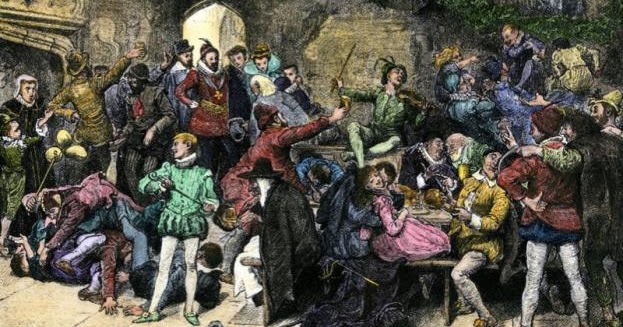
I was only expecting it to be amusing and informative. It was! Christmas caroling started out as sort of like a pub crawl complete with dick jokes set to music! Like, that’s what carols were, rather than the hymns we sing now. (If that’s not the kind of caroling I can really get behind, I don’t know what is. I love the thought of Christianity being muscular enough to wrestle any pagan tradition that came before it to the mat. Oh, you have a temple dedicated to sacrificing children here? Boom, it’s a church now. We just claimed it. Oh, you celebrate the Winter solistice with drunken orgies because you’re poor and it’s cold and dark? Well, here’s a God who became a poor baby. Go ahead and get drunk and celebrate it, just hold off on the orgies and wait ’til Christmas Eve. And the idea that this kind of thing shouldn’t be scary or something to worry about is just one thing drawing me ever closer to becoming Orthodox.)

I digress. But really, please listen to this podcast if you want to hear the best thing you’ve heard about Christmas this year.

What got me was when he said “it’s the high made low.” It was all of it, really. You have to hear it in context, and maybe it won’t land for you. But I’ll tell you: I don’t have a better answer than this. I’m convinced there is no better answer than this, and that most of what we are doing is obfuscating it with all the morality plays. Because, let me tell you, I’m good and tired of morality plays. Our priest likes to hammer home during the Advent season that the church traditionally uses the four weeks to dwell on the themes of, get ready: Death, Judgement, Heaven and Hell. God help you if you put up a Christmas tree before Advent is over because here we are FASTING and we are CONTEMPLATING JUDGEMENT AND HELL. I’m not sure what tradition or time these themes come from. I suspect he means it comes from medieval Catholic England at the time of the English reformation, (from whence comes everything worthy of being called religion), but I don’t know for sure. My kids have taken up a quite combative line about this that would make him proud, pointing out the inconsistencies with the Advent presentation some poor kid did at their school that merely highlighted themes of Joy, Peace and Love or some such nonsense. I presume this wasn’t done to the kids’ face. I should probably find out.

While I do think we have an odd sort of peeking-through-our-fingers relationship with death and the possibility of judgment in this culture, and therefore could probably do with taking these things more seriously, I can’t say they have any special hold on my attention or have made me more holy by hearing about them every year. It all feels like another morality play I’ve sat through my whole life. But it is sometimes refreshing. It’s certainly not the same old thing!

Then there’s the newer one about how the earth is dying and everything is injustice and I shouldn’t even think about complaining over my relative poverty and inflation and lack of access to the insurance-covered health care I want and how impossible it is to live on one income with five kids and how I never get a moment to myself because…privilege.

I’m tired.

And right now there is nothing in heaven or on earth that would have moved me other than this reminder of the high made low. No admonitions to do the right thing and be the right sort of person and do good works and pray more were ever going to touch me. But this pierced me and I found a bottomless well of joy underneath: the highest made himself lowest. Lower than me. Uncontainable power and life contained Himself in a cell in the body of a poor woman and was born the most vulnerable He could be: a poor Jewish baby in the Roman empire. It defies description. The Logos of God – His essence – became flesh and dwelt among us. Utter perfection made himself imperfect, able to be killed. Indeed: Born to die. He came down to be among us. He knew we were crucifying peasants, raping women and children, sacrificing babies to demons, carrying out genocides…and He came to dwell among us. The light shines in the darkness and the darkness has not overcome it. He is here. He is with us.

And it’s not that it makes the most sense, although Christianity has an internal logic and a through line from ancient times that is hard to not feel compelled by – especially, for me, as I’ve understood the early church fathers and the Old Testament more and more. See Ancient Faith Media. I get that it’s a claim being made, that I have to have faith in it. I have to stake my life on it being real. But it’s a claim at once so bold and so warming as to be inescapable. You have to deal with it and it’s either true and everything has meaning – the miasma of sadness and despair, while threatening, can never have the last word – or it’s fake and all there is is darkness.

But oh…if it’s true. Jesus Christ, the true light which gives light to everyone, is here with us.

Homeschooling Victories

I often mention how difficult I think my children are on this blog, and I’ve been realizing lately how little I talk on here about how amazing it is to get to be with them, and how the hard behaviors are all wrapped up with their genius as people. This is partly because I don’t want to expose them, partly because our real life is lived with the people we see and spend time with, and partly because when things are going well I don’t stop to analyze it as often. I was chatting with a mom the other week whose kindergarten-aged son is hating the curriculum she’s using and she can tell the lessons are going over his head. He’s not learning to read. Her two-year-old daughter can sometimes get the answers her son can’t. Her husband is anxious, she feels like a failure, he’s saying they’re going to put their son in school next year if he hasn’t learned to read by the end of the year. And I resonated so hard with all of that; every part of it.

I had several false starts with my oldest son where I could tell everything I was saying was going over his head. It wasn’t that he wouldn’t try, it was that he just didn’t understand. He wasn’t ready. All I could say at the time was that I could tell he wasn’t ready. I didn’t have any answers for how he would be made ready, or when he would be ready on his own, I just knew he wasn’t ready then. I also knew that putting him in school might produce what looked like progress in the short run, but may not result in actual reading comprehension in the long run. I knew my active little five-year-old boy would soon get very tired of sitting still in class and that he would most likely be labeled ADHD, and I just didn’t want that for him.

When he was seven and my second-born was almost six, we decided to put them in a hybrid school for a year. Two days in school, the rest of the time at home. We had done some extremely painstaking work together the previous semester when he’d turned seven, learning the alphabet, learning to sound out some words. It was rough. But he had something. We put him in first grade, knowing he’d be behind on reading but probably ahead in math. That program turned out to be more work for me, and I really didn’t like it at all (a whole different post) but he did gain confidence that year. There was value in him seeing what the other kids could do. His competitiveness made him rise to the occasion. All of his teachers told me at our first meeting that he had gained confidence and that he wanted very badly to please them.

I want to pause here and say that, while those things were helpful and needed tools for all of us for that time in our lives, I don’t see them as appropriate guiding forces for education. I didn’t want my son to do the work because he wanted to beat the other kids and please his teachers. I’m happy for him to have other outlets to exercise those strengths, but the delicate joys of story and logic need not be a proving ground for them. I want those to be a joy unto themselves, and if his unformed boy’s brain can only grasp a part of what we’re doing – if he only wants the bread rolls out of the feast I’m trying to lay before him – then so be it for now. If I can extend the metaphor, here’s the attitude we’ve adopted: you don’t have to eat everything on the table, but you do have to eat a few bites of the healthy stuff before you can have a treat.

When he was two and not yet saying many words, my husband was very concerned. I remember our wonderful family doctor (who had seven kids of his own) told us this guiding principle that has stuck with me: only be concerned if he loses words he has already gotten. As long has he’s moving forward, even if he’s going slowly, he’s doing fine.

That advice has gotten through some harrowing spots! Today, my son is reading at grade level and writing book reports; every day, in fact. Because I have to keep things dead simple to keep my sanity and to keep us moving forward, we do not use much curriculum. Most curriculum drives me nuts anyway. Here’s what he does more or less every day:

  • Reads a chapter in a third-grade chapter book, tells Daddy what it was about, and then writes a one-page book report. We use the spelling errors to make a spelling list, which he studies.
  • We use Math U See for math for all the kids, and I love it.
  • In their morning time with me, we read the daily office for Morning Prayer from the Book of Common Prayer, learn a hymn, and read books together. We’re studying American history, so we’ve read some historical fiction like The Witch of Blackbird Pond, and Johnny Tremain. We also read an art history book called Great Painters, Shakespeare stories for kids (and we’re starting to watch Henry V together), and various nature books.
  • All the kids are working their way through the Hooked On Phonics app on the iPad
  • The boys play the Prodigy math game on the iPad every day
  • Piano lessons once a week for each kid

There are innumerable other things they do to contribute to their education, with and without my help. This weekend, Wyatt (8) found two spiders while he was doing chores. He put them in jars with little habitats, looked them up in one of our field guides, and made a drawing of one of the spiders, including the approximate scale of the spider compared to him, the markings on its back, and the position of its legs. He read to find out what it eats. He had zero prompting from either of us. Gilead (10), is constantly building something, and Ginny and Wyatt are almost always drawing. Ginny (6) has basically taught herself to read, and reads all the time. We listen to an audiobook (right now, it’s Harry Potter And The Goblet Of Fire) as much as possible, and I try to take them outside for a nature walk as much as I can. In the winter, it’s more like sledding or snowboarding for Gilead. We try to keep a big pile of library books handy on subjects they’ve chosen, which I find them perusing throughout the day. They ply the adults at our small church with questions on any given topic they are obsessed with at the moment: Aliens and Bigfoot have been especially prominent lately. They also have access to the Camera, Garage Band app, and a stop-motion animation app on the iPad. They’ve used all of these to make their own art.

This is not an exhaustive list of what we do at home, and it doesn’t even include our extras, like basketball, AWANA, and our homeschool co-op. I just wanted to illustrate that a) being “behind” on one subject and having trouble with it doesn’t spell disaster for the future, as long as you are moving forward, and b) you don’t necessarily need fancy (expensive) curriculum to make actual progress. When I write it all down like this, I realize how much my kids are getting, and how expediently we’re doing it. Henry does math and language arts with the boys while he’s working from home. They are usually done with everything by 1:00 p.m. and have time to pursue their own interests all afternoon. I clean, take care of the toddler, and workout around Ginny’s schooling needs. And it’s all done in a peaceful home atmosphere without the need to rush anywhere first thing in the morning, and without the external pressure to hit an arbitrary benchmark.

How Children Learn: A Short Review

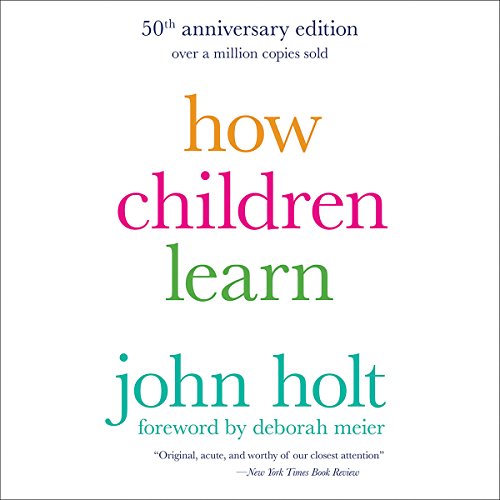
I recently finished listening to John Holt’s How Children Learn, the 50th anniversary edition. It was an Audible purchase I made on a whim, but I’m glad I did. Holt (not the reggae singer) was a disillusioned public school teacher who wrote a book previous to this called How Children Fail, which sparked a debate in the 1960’s. By the time he had released his second book, (this one) he was already expressing disappointment in how little had changed in the public school system after a promising upheaval.

I was so inspired by what he had to say, which mostly amounted to close observation of young children who have not yet been schooled, or who have had little schooling. It is literally a study in how children learn. I am eager to read How Children Fail to see how he approaches that subject. His insight is life changing, both as I reflect on my own education and what I know of my husband’s, and as I evaluate my preconceived notions of what my own children should be doing as I am homeschooling them. His insight into the type of research that was being done on children at the time (upon which many of our current practices and values are based) is pure gold.

My takeaway was that people mostly teach themselves anything they want to learn, and that they mostly do it in spite of what someone else is trying to teach them, unless the teaching is very pointed and practical for their needs at any given moment. Holt was dismayed at the increase in testing 30 years ago, despite his work as a teacher trying to help the system move the other way. I wonder what he would think now? His conviction is that all school mostly does is grind any spark of creativity out of kids, so that as adults they have stopped trying to learn anything. Unless they are very stubborn and exceptional people.

Don’t take my word for it. Definitely read him for yourself.

I think what he’s saying is true. What he writes resonates with what I’ve read of Charlotte Mason and with my own experience, especially in learning to teach my children.

Present With Suffering

Photo by Pixabay on Pexels.com

Sometimes, like the other day when I went to get my hair cut, people are astonished when I tell them I have four children. “That’s so many kids! Oh my gosh.” My hairstylist wasn’t chiding, but she was genuinely taken aback. 

I wonder what she would have said if I’d told her I wasn’t necessarily done. 

It’s a hard pill for some of my family members who know it to swallow as well. My last pregnancy was very difficult, as was the treatment and induction at the hospital, and the recovery. If things had gone differently, I could have died. It was not a great situation. 

I understand their concern. They treat me like the adult I am, and we’re not at odds about it. There’s a legitimate question that I ask too: where’s the line? How much danger do you allow yourself to be in for the sake of bearing another child? The answer to that question for you probably rests on what you believe about reality, as does mine. 

The comments and advice I get, as well as the soul-searching conversations I’ve had about homeschooling are in a similar vein. I am around plenty of other children, and I know mine are all extremely strong willed. They all act like first-borns, which shouldn’t surprise me since they have two pretty fiery first-borns as parents. God help them. They are – some more than others – utterly exhausting at times. There are some personality traits that are a cross to bear, some learning difficulties that have me stumped. 

It’s hard, hard work being a mother. I can’t even tell you what it is to try to figure out their learning needs because I have so little with which to compare it. It’s more than hard. I have doubted myself and my choices for as long as I have been making them. Should we get him evaluated? Should we get put him in preschool? Should we put him in kindergarten? Should we this, should we that? Am I ruining his life by keeping him at home with me? Setting him up for failure whenever he joins the world? 

When everyone around you is doing the same, different thing from what you believe to be right (Some of it, right for us. Some of it, I will admit, I think is just right, period), it can be confusing. And when the answer everyone seems to want to give you is to send him to school, to stop making such a big deal of it, to just admit you’re not a teacher and those are the only moms who are successful at homeschooling, it can feel crippling.

But I am stubborn and headstrong. It’s a thing I didn’t know about myself until lately. I’m proud of it, in this instance.

I remember so vividly the time in my friend Emily’s life when she had four small children, whom she was homeschooling. Brilliant Emily, with an Ivy League education, who could have made more money and had more prestige in her lifetime than I will ever see. She had chosen, instead, a life of bearing children (Emily has 8 of them now!), and she was in a health crisis. They were paying me to make dinner for them so she could have some space to focus on her health. It was such a sweet time for me, and Emily is a kindred spirit. 

I remember her telling me how the people close to her were telling her to stop having children. They couldn’t understand why she would persist. You’re sick, they would say to her, you’re depressed. It’s obvious what you should do. 

Here’s what I think it often amounts to, this good faith permission to give up: it’s a denial of suffering. It’s a denial of the truth that we all must suffer some things. We all die, we all suffer. It’s a denial of the good of suffering; that it produces patience, perseverance, character, hope. 

And I think, ultimately, that kind of advice will backfire. What kind of language will it give you or your friends, what kind of symbolism, not to mention experience and fortitude for when you must suffer because you have no choice? And if you can’t even sit with someone who is suffering these relatively small discomforts for the sake of something bigger, how will you sit with someone who is suffering senselessly? What language will you have to give them? What symbols can you point them to to show them their suffering has meaning? How will you help them bear it? 

Also, how could you possibly hope to stand for what you believe in yourself if it means you will suffer? 

It’s not always so cut and dry, I realize. My friends who perhaps haven’t wanted to see me suffer through the process of homeschooling may not agree with my conclusions about education, and therefore think I am suffering unneccesarily. Or they are also afraid for my children because they think I may fail them. I wouldn’t fault them for that, it’s a mark of character. Or they could be simply tired of hearing me process the same fears over and over, or rightly see that I am complaining but don’t know how to tell me that’s really my problem. 

Our culture is against most kinds of suffering. We’re all for suffering the lack of a personal life and sleep to pursue an exciting or important career. And certain factions are still all about physical suffering for the sake of a better body or a better race time. Winning, in other words, is still seen as a good reason to suffer in our culture. But for other things? No, we have therapy for that. We have drugs. We have schools and daycares and contraception. We have self acceptance.  

Fewer and fewer people see suffering for the sake of bearing another child as anything but lunacy, except for in a few situations. Nobody thinks the mother who has four children already, and who is likely to be in danger if she gets pregnant again, is doing anything noble by having a 5th child. I am likely to suffer, if I do, both in body and in spirit from the knowledge that many people think I am crazy or don’t approve. My friends and family won’t stop loving me, but they may not understand. Even if this is so, I still count myself very lucky.

It’s similar with my decision to keep homeschooling, especially when my kids don’t hit the “right” benchmarks at the right times; when they compare unfavorably with my peers’ kids in the wrong ways. And on top of that I am tired, I am sometimes confused, we don’t have a second income, and I am overweight because I am neglecting myself. Making changes to any of those things while also caring for a baby (and other children) is nigh on impossible.

My friend Emily persisted. She does persist. And I’ll tell you this: because she allowed herself to suffer rather than use an easy out, she has a depth and a wealth to give to me and to the world. Her season of bearing and raising children is relatively short in the span of her life. But think of all she has learned how to give when that’s done! It has changed her, irrevocably, for the better. Not to mention, in this case, the many beautiful souls her suffering has brought into the world. 

I think maybe we see someone suffering like that and think it’s going to break them. Maybe they’ll get divorced. Maybe they’ll get sick.  It’s a real fear in this broken world. But maybe it’s because we have so little imagination for suffering – for what comes after. Yes, it does make some people brittle. It does lasting, terrible effects in some cases. I don’t think I have all the answers for suffering. 

I guess I’m just saying that sometimes the most helpful thing is not advice or a solution. Sometimes, when you see someone suffering – even if it’s for something that makes no sense to you, and especially if it’s someone you love – the best thing you can do is allow them to suffer. Allow that they are suffering, and there’s no way through it but through it. When you want to give someone an out, it may be more for your sake than for theirs because it’s hard to watch someone suffer. It also takes humility.

Courage

I’ve seen in several places recently, a false and damaging idea repeated about what courage is and how it works. It goes something like this: there is some man or woman out in the world who, being placed in a sphere of influence or at an intersection with a group of people who disagree with him, holds an unpopular opinion and refuses to back down. The commentator upon this scene gives the opinion that this person ought to have shown courage by capitulating to the group, or that the group in fact showed courage by standing up for what’s right. Inevitably, the situation ends with nothing going the dissenter’s way. He has stood for what he believes to be true to no avail. In the opinion of the observer, truth and righteousness have prevailed and the dissenter deserves to be cast by the wayside, along with his unfortunate opinions. The courageous mob lives to fight the next battle. 

If I had only encountered this idea in one place, I would have laughed it off, but I’ve seen it over and over in the last several months: this legend of the “courage” it takes to be on the winning side. It’s always about some current cultural battle: arguments over gay rights or white privilege, for example. Never mind how laughable it is that a pro gay rights or anti-racist agenda could conceivably be considered the underdog position in this country, just leave aside what the scene is about and focus on who is doing what in which place. Can you honestly tell me that one man, standing alone against a mob is exhibiting cowardice? Or that a mob, speaking the widely accepted cultural narrative for which they will receive no blowback whatsoever, is exhibiting courage? 

No, friend. Disagree with the man if you will, but he is no coward. It takes a lot of courage to do what he did. 

I was reminded of this the other day when this quote about Saruman came on as we were listening to the Two Towers: 

“anyway I think he has not much grit, not much plain courage alone in a tight place without a lot of slaves and machines and things, if you know what I mean.”

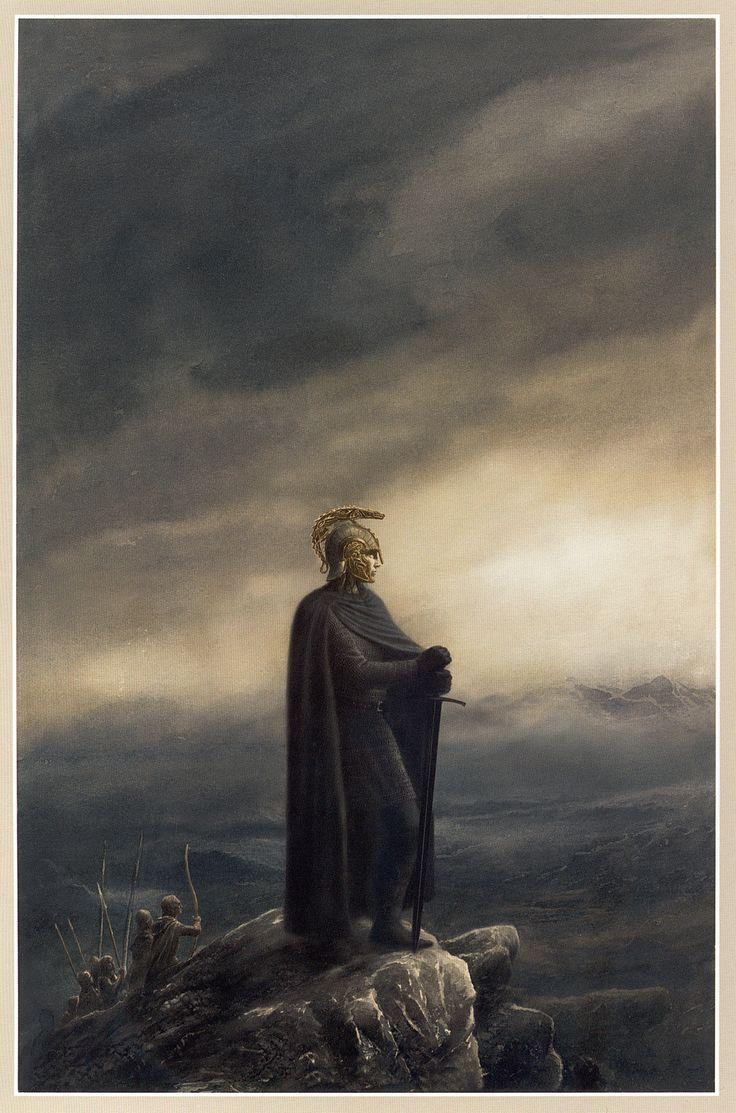
The hobbits are comparing Saruman and Gandalf, both wizards. Saruman has just lost his bid to try to capture the ring by sending a band of his orcs to kidnap two hobbits (whom he hopes are the hobbits with the ring, but alas, are not) and attacking the stronghold of Rohan with his enormous orc army. While Gandalf, after being sent back from the dead after his battle with the balrog under Moria, rides alone back and forth across the plains of Rohan to muster aid to Theoden, king of Rohan. 

C.S. Lewis says this about courage in the Screwtape Letters:

“Courage is not simply one of the virtues but the form of every virtue at the testing point, which means at the point of highest reality. ”

I’ve been thinking about this idea as I’ve been thinking about courage lately; that courage is “the form of every virtue.” In this climate, it takes courage to be truthful about what you believe, if those beliefs in any way deviate from what is currently acceptable. Why does it take courage? Because right now, if you disagree with the racial narrative, for instance, you see the violence being done to others who have disagreed. You are seeing people get attacked online, and be alienated from their friends and family members. You’ve probably heard about people losing their jobs or being forced into racial sensitivity training at their place of work. If you disagree, you are probably scared. Telling the truth about what you believe, even if it’s counter-cultural, has real-world consequences. Just ask Bret Weinstein. 

Another example, nearer to my heart at the moment, is how much courage it takes sometimes to hope. We arrived in Birmingham on Thursday afternoon to the news that our dear friend Chris Scherf got a diagnosis for the cancer that has ravaged his body in a shockingly short period of time. He’s had it for a long time, according to his doctors, but it only took weeks for it to start shutting down his organs after he found out about it. Once it was advanced enough to cause pain, it was too advanced to cure. 

With the diagnosis came a great sense of hope; a crushing, unbearable hope. In fact, earlier in the day, word had come from MD Anderson hospital in Houston that they had looked at Chris’s sample and couldn’t make a diagnosis. They were basically giving up. They had a few more stains to look at but didn’t expect it to reveal anything new. The choice had been between a catch-all chemo or hospice.

A few hours later, Chris’s oncologist came rushing into his room and almost shouted the news: Follicular Dendritic Cell Sarcoma. And they had the chemo drugs to administer the next day. 

But. 

No one knows what will happen to Chris’s body on chemo. He’s weakened, frail, in pain all the time. It’s hard for him to eat. It’s easy to look at that and tell yourself it won’t work. It’s easier in this moment to abandon hope for his recovery because when you hope, you allow yourself to think about the good things he might have again and the good things he might be for the people who have depended on him. I hardly need to elucidate those for you. He’s young, he has a beautiful wife and four small children. He’s beloved by many, and wise, and gentle, and selfless. We want him to live. We petition God for his life from moment to moment. 

It makes the grief that much harder to bear if hope gets taken away. It’s easier not to hope. It takes courage to look that hope in the face, and to bear the potential pain of it. It takes courage to be more human rather than less – to look loss in the face and own your intentions, your mistakes, your bad feelings, and the truth of things – and hope for good anyway.

What Christians are doing is looking not only at this life, but beyond it. We believe that death has already been defeated. Did you know that in the account of the death and resurrection of Jesus Christ, it says that people rose from the dead after Christ’s resurrection? I love that image. Some true thing was happening that couldn’t be contained, though it’s meant to come in its fullness later, after time. Life was bursting out from his resurrected body and it would not be denied. A higher reality than what we can see was showing through the cracks of this dark world.

I love Tolkien’s stories because they are full of people who have courage. Sometimes all it takes is for one man to stand against whatever is coming, knowing it could mean destruction, to give everyone around him the courage to keep going. I’m not saying Christ was doing something metaphorical. I believe He is God, and that He is alive. I believe He was ushering a higher reality into the darkness of our present world. But whatever else it was, his death took courage and all courageous deeds mirror and complete His.

Our dear friends are exhibiting great courage right now. They are staring suffering and death in the face and believing it will not end them. In fact, they are – like my favorite Tolkien characters – unchanged in their personalities, humility and humor as they endure this suffering and fear. I don’t want to suffer, but when I do, I hope to face it like this.

The Shunamite

Elisha and the Son of the Shunammite Woman, by
Jan Sluyters

Two prophets

Two widows

Two boys who died

Two men of God, spread cruciform upon the dead – hand to hand, eye to eye, mouth on mouth

Breathing back the breath of life

To bring hope back from the dead.

Two desperate women, standing aside, praying for a miracle

What does it mean? 

That it was repeated, twice in a row

Elijah and Elisha

I can see his sensitive hand, still

The curious Asian curve of thumb

I can feel its heavy, warm weight in my own

I’d never held his hands

(Of course I’d never held his hands)

I think about how stark it is to die (and we are always dying)

Boundaries blur and are erased

Frailty exposed to the outside world – the mess too big to contain

We rubbed his twitching feet, we held his warm, dead hands, we kissed his distended head, we whispered in his ear

All the things we wish we would have said when he could hear us

(you are my best friend, too)

Would he have wanted it, then?

Did it matter?

In the end, I felt Jesus spread himself on top of Ray like a prophet 

I whispered it in his ear

Jesus is here. He is right on top of you. Can you feel him breathing your breath?

So near. (too near?)

In the end, we cannot keep our selves from him

He is near. 

Eye to eye, hand to hand, mouth on mouth

Breathing in death, breathing out life

In the end, even our deaths are his

What does it mean?

In our most frail. When bodies uncoil.

When we are unable to contain the blood, the piss, the spit, and the shit

He is most near. 

To bring back hope from the dead.

Beyond All Hope

It’s late October, 2020. A nail biter of an election looms. We’ve been boxed out of the public sector for months, unable to go to many of our favorite places because of COVID restrictions. Many of our rights have been taken away for months on end. Our churches are closed or tightly restricted. People who formerly got along are fighting. There is violence all over the country. There’s an ideological war going on constantly. The days are getting darker.

This week, one of our best friends is in the hospital, with cancer, and his body is shutting down. He’s actually, with his wife, the legal guardian of our children in our will should we both die – a relic from when we had only one child and lived in the same state that we have yet to rectify. He’s far away, lost in a stupor of pain, unable to text or speak on the phone. Turning over in bed is painful for him. We can hold onto him only through our prayers, in our shared connection with Christ, and through his wife my dear friend Sarah. 

Four years ago at this time we were facing another contentious election. Another best friend – the godfather of our children – was in the hospital, with a cancer diagnosis that left little hope of his survival. The last time he “liked” an instagram photo of mine was on Halloween. He died on Thanksgiving Day 2016. It feels eerily, horribly familiar. While Chris’s cancer isn’t the same as Ray’s, and we expect and hope for healing and a long life so Chris can father his children, some days are very dark indeed. 

I know you all feel it right now, even if no one you love is dying. It’s a dark time indeed. Personally, I don’t think any big problems will be solved with this election. I hope some of them will, but I’m afraid of what the alternate reality holds. I’ve never lived through such a scary or helpless-feeling period of time. I know it’s the same for everyone else. 

This time last year I found out about this podcast – Amon Sul – from a fellow Tolkien nerd. He said, “it’s Orthodox priests talking about Tolkien” and I had never heard a lovelier sentence come out of anyone’s mouth. While it isn’t strictly Orthodox priests (Father Andrew has guests from the Orthodox church, academia, and even the military on the show), it’s seriously some of the most beautiful theological, symbological, and literary talk available in the world. Every episode is like:  ‘’Ah! the green smell! It is better than much sleep.”

In one of the most recent episodes, Dr. Lisa Coutras does a deep dive into the story of Turin Turambar, which, if you have read the Silmarillion, you know is a very dark story. It is a story Dr. Coutras says she finds beautiful, which is odd, but the reason is so moving. She loves the story because it’s a profound example of what she loves – and what I love – about Tolkien, and that is his sense of hope in the face of great darkness and impossible odds. 

artwork by Alan Lee, from the cover of Children Of Hurin

In fact, after hearing that episode I started thinking about how on Henry’s and my first date, (Thai food in Glen Ellyn followed by a flute recital at Wheaton), I quoted to him a line I had read that day from the Silmarillion whilst eating lunch in my car on my break at the “I Sold it On eBay” store. And he cried. 

I don’t remember the story, and I can’t find it now, but I remember this line, “beyond all hope.” It’s so piercing you want to read it again and again. It’s the reason I read LOTR every year. Hope is the virtue uniting every one of Tolkien’s stories. Real hope. Hope in deepest darkness. Hope in the face of certain torture and death. Hope written by a man who lost his whole generation in the trenches of WWI; who was spared (I think, so he could help save a people yet unborn [me]) because he got sick and couldn’t fight. Mighty and mysterious is the hand that preserved JRR Tolkien and formed him into such a sword. Did he know he was a man like the heroes of his stories? Hope, that sees somehow beyond all hope. That somehow, we will come out into the light of day. 

Hope is elemental. There’s nothing similar to, but more pure than hope. You can’t reason your way to hope, nor prove to someone why you should hope. Sometimes you must choose to hope, as Aragorn does repeatedly in the face of impossible odds. Sometimes, hope is bestowed for a moment, as when Sam sees a star in the middle of Mordor and remembers that there is something beyond him and untouched by his troubles, and he is at peace.


Frodo And Sam On The Path To Mordor by Forestina-Fotos on Deviant Art

Henry cried on our first date because he was a mere 2 years into his long battle with chronic fatigue syndrome and had already given up on getting answers. The quote reminded him that he could hope, and that hope was not wrong. I think sometimes we need permission to hope for the good things we want for the world and for our lives – health, wholeness, freedom from pain, children, friends, marriage, peace. Henry has not yet been healed of his illness (although he got a red-headed wife as a result of that date). He’s finally getting treatment that’s starting to help, but even if he wasn’t, hope never dies. In fact, that’s what sets us apart from the “heathen kings.” We hope. 

We hope for healing of many things in this world: cancer, stupid elections, broken relationships. And we hope for the day when the battle will be over, when all wrongs will be righted, all pain made meaningful, every tear wiped away. We hope in the face of darkness, beyond all hope.

Homeschool Is Magic*

To homeschool or not to homeschool? In years past, a stray encouragement on Facebook to parents who were thinking about it but not sure they could do it may have elicited little response. But because we’re having a moment right now, and it’s politically correct to say we should shove ALL kids in front of a screen all day to somehow protect the “rights” of SOME unfortunate kids who have no choice, it’s now highly contentious. Hasn’t everyone been saying for years that it’s a broken system for many kids? Has throwing my tax dollars at it changed anything in several generations? Haven’t we all been nail-biting over school shootings and bullying for a decade? I don’t get it, because all I want is to be encouraging to those few people out there who are trying something new.

I was homeschooled for eight years. I had an amazing Kindergarten teacher, Mrs. W. Then my first grade year was marked by almost daily bullying by a male teacher who disliked me. I think he was tired and I made life more difficult for him by finishing my work early and asking a lot of questions and having my own strong opinions. I remember him sending me to the sink in our room by myself to wash out his dirty microwavable soup cups. When I gashed my finger on the edge of one of the cans, I could feel the waves of guilt rolling off of him as he walked me down to the nurse’s office. He probably couldn’t even pinpoint why he disliked me. 

In second grade, I hung out with Annette – who knew how to read an analogue watch and had estimated the length of the track around the playground. She set a goal for us to run a mile every day by portioning out a certain number of laps around it to each recess period. I also played kissy-kissy with the boys. Mrs. Sebasty read us James And The Giant Peach. I could not wait until that time each day. I was also given a LOT of busy-work to do – mostly alphebetizing words – when I inevitably finished my work before many of the other kids. Annette was always bent over her own busy work as well; most likely quadratic equations.

this is a photo I took the other day of the boarded up middle school across the street from us

When I went back to public school as a junior in high school, my experience there was similar. My health class teacher turned the speed on my treadmill up as high as it would go when he visited my P.E. class one day, which caused me to fall and scrape my knees. They oozed and wouldn’t heal for months until I debrided them myself in the bathtub. I nievely parroted “whore corps” (a popular slur for the color guard) to the band teacher – having heard it from the little brother of one of its members – in a move that would have me moping around his office for days trying to work up the nerve to apologize. His daughter was in color guard. My crowning achievement was mis-repeating a joke my friend Lindsey told in our honors English small group of four. The one Jewish kid was arguing about the Bible passage we were reading (he had been told not to argue theology, but to discuss literature). She had said, “get this Jewish kid out of here,” and we had all laughed – him included. I quipped to the whole class when the teacher repeated this instruction: “Yeah! Get This Jew Out Of Here!” 

I will never live it down. 

The overwhelming memory of my time in school is one of dehumanization. I was already prone to anxiety and depression, but the constant repetition of my days at school, being herded like cattle from one place to another in a windowless building with thousands of other depressed kids made it much worse. I made it through despite the system, and because I already had a lot going for me. I could sing, which put me in the top choir automatically and gave me an instant group of friends. And I was a good student. I quickly learned to dumb down my vocabulary and my heightened sense of morality so I could have friends. I was still the girl who got apologized to when someone else got drunk at a choir party, but what are you gonna do? 

My 8 years of being homeschooled was far from idyllic. My mom was struggling with an undiagnosed chronic illness that kept her from sleeping or eating well and left her in pain much of the time. She got down to 80 lbs at one point. My dad was moving us around and traveling half of every month sometimes, just to get that next raise and keep the family afloat financially. They felt morally obligated to educate us themselves, despite the toll it took. It would have been far easier for her not to do it all while still paying into the public education system we weren’t using. I was lonely sometimes. We have some gaps in our education. And when they put us all back in school the same year, it needed to happen for the sanity of our family. 

I’ve known I wanted to get married and have a family for a long time. Since I was a little girl. Most of my other desires have been subservient to that one. It’s not morally better than someone else’s choice, it’s just what it is. For a long time, I didn’t think I would homeschool my kids. In my 20s and early 30s I harped on all the negatives I associated with homeschooling and how I didn’t think I was cut out to be a teacher. Then I actually had children. 

It’s hard to describe what I mean when I say that, because what I knew the moment I gave birth to my first child defies description. Maybe I’ll try to write more about it someday. From that first moment, through their early childhood when I was drowning, until this day, I have had the sense that there was no going back. Until you hold that baby you’ve just pushed out of your own body, you don’t realize what a weighty thing you are doing.  You don’t realize it in pregnancy, even. All my ideas of who I planned to become and how I was going to conduct motherhood got dismantled in that moment. A new person has just entered the world through you, and he’s a real person, not an idea. And then you give up your sleep and your body and your autonomy to keep that person alive. To me, it was crazy that I would send him away from me for 6,7,8 hours a day to be shepherded by government employees a mere 5 years later. So I could do what? 

When you spend that much time with your child, so much so that you know what they want before they can say it with words, it changes you. You want the best for him. I don’t know. I guess I was just confident enough to insist that I was the best thing I could give my child. Who else on earth would be willing to give him more than I was? 

Here’s what I did get “in homeschool:” stories. Stories, stories and more stories. My mom read The Chronicles of Narnia to us and my life changed forever. My imagination exploded. My memories of that time are filled with running around outside in the woods and in our backyard exploring. Getting muddy. Inventing stupid new games. Playing Indians. Playing dress-up. I read so many books. I was reading all the time. I was also writing, without anyone prompting me to write a word. I was drawing, and painting, and sewing. I would bake a cake in the afternoon from scratch, just because. My mom didn’t pull out the pristine baking set, don a flowery apron and gather us lovingly around to let us all “help” her bake. She didn’t have to. I knew how to read and I was interested, so I did it. I also microwaved an aluminum pan for like 5 minutes and then grabbed the handle. I did get burned, but I’m still baffled that the microwave survived it.

I learned to play the piano and take care of horses. I sang in church choir and learned to play the guitar. I wrote a song or two. Those years, despite being sometimes lonely and sometimes sad and angsty, were filled with room to breathe. There was quiet and order in our house, and there was enough to do and to think about without a lot of lessons or homework. Even if I didn’t get the perfect education (what constitutes the perfect education?), I did get those priceless gifts. Not to mention, the gift of parents who stayed married and who lived according to a creed they believed outranked themselves.

I ended up being one of 12 valedictorians at my public high school. It’s silly, and I shouldn’t have been there because I wasn’t getting A’s in calculus like the other kids, but that’s just to illustrate that I kept up pretty well when I went back. I also had plenty of friends, just so you know. And then I went on to get into a very competitive college (their most competitive program, in the most competitive slot if you want to know) and aaaaaaalmost pulled off a Cum Laude (damn C in Philosophy 101. Boy problems). I wasn’t actually trying for any certain grade either. 

But you know what I would really be proud of, if I had done it? Starting my own successful business. We have come to have all these marks of success that are laid out on well-tended paths, and those are fine. It’s hard to become a doctor or a lawyer in many ways. But it takes guts to be different. It takes a lot of stamina to keep doing something people don’t understand and won’t support you in. It’s hard to stand out and flap in the breeze, not knowing if you’ll actually achieve what you’re trying to achieve; but that you believe you should be doing because it’s what you were made for. 

My mom was doing something remarkable, and I know she blames herself for the bad parts of it. I don’t think she realizes how profoundly her choice to homeschool me has shaped the way I think about the world. When I say we can be innovators I don’t mean that every family has to homeschool. It’s not feasible for my neighbor – a single mom of 5 kids who works nights as a nurse’s aid – to homeschool her kids. I know they’re unavoidably alone most of the day right now for school, and I feel for them. Some of them, the younger ones, come over to play with my kids almost every day and I’m so thankful for that.

What I mean is what I quoted in a previous post: “Genius is as ordinary as dirt.” Homeschooling is one way of getting out of the way of the genius that’s inside every human child, and/or helping it to come out. I remain firmly convinced that even such simple changes as more free play and more time outside and in nature can work wonders for kids who are having a hard time academically or emotionally. I spent enough time in and then out of school to know that most of it is busy work. No offense to the great teachers out there, but a lot of the time I spent in school was social time, or filling-up-time time. What if (just as one example) kids could interact with nature in a meaningful and personal way every day, rather than spend so much time inside and bored? And what if some of those same kids could be left with enough time outside of formal study to think about and pursue their own ideas? It’s the “accidents” of the school systems that have given us our most celebrated geniuses like Einstein. What if we are missing out on a hundred such geniuses who could have helped solve our environmental crises because we’re insisting this broken system is the only system? 

When I encourage parents who have thought about homeschooling to do it, and tell them it’s not as hard as you think it is, I am trying to “be the change,” and all that. I’m telling you from the mere first steps past the other side that you CAN do it – whether it’s homeschooling your own kids or forming a small school for your neighborhood, or helping an inner-city mom who has just HAD IT to take back the power. (I know someone who is doing this, and I am beyond amazed by the few Black mamas I know out there who are going against what all of their friends and families are doing to homeschool their children. That’s true pioneering and it’s fearsome to behold.)

science experiments on Sunday evenings at the dining room table

I’m here to tell whoever wants to hear it that it’s worth it. Once you’ve done something hard and scary and lived through the self-doubt and the criticism and you’ve prevailed (sometimes all that means is not giving up), you feel powerful. You feel more human. You feel like you can do what you were made to do. That’s the thing I want more parents and more kids to experience. Yes, you can get a better education through homeschooling than in public school. You can also get a worse one (just saying). But the best thing about it, in my opinion, is the thing it will teach you and your kids when you do it: 

You can change your life. You can create new things. You have the power to work hard and be diligent and all sorts of opportunities will open to you. There are countless examples of this throughout history. You can innovate. You can think for yourself. There is genius inside of you, and you are not like anyone else. And yes, the world needs you. It needs the fullness of all you can be. 

*homeschool is not magic, but it can be pretty remarkable.

Blog at WordPress.com.

Up ↑